IMU boards · pressure boards · Bluetooth LE
BlinkPose.BLE connects over Bluetooth LE to a whole set of small wireless boards at once and republishes what each one measures in real time — IMU boards send a fused orientation quaternion, and pressure boards send ten live load channels each. Because the boards are small and wireless, it's the natural fit for wearables, props and mats — and you can tare any orientation board straight from the dashboard, capturing its current pose as a new zero reference on the fly.
orientation quaternion · 10 pressure channels · mixed rosters · tare · real-time
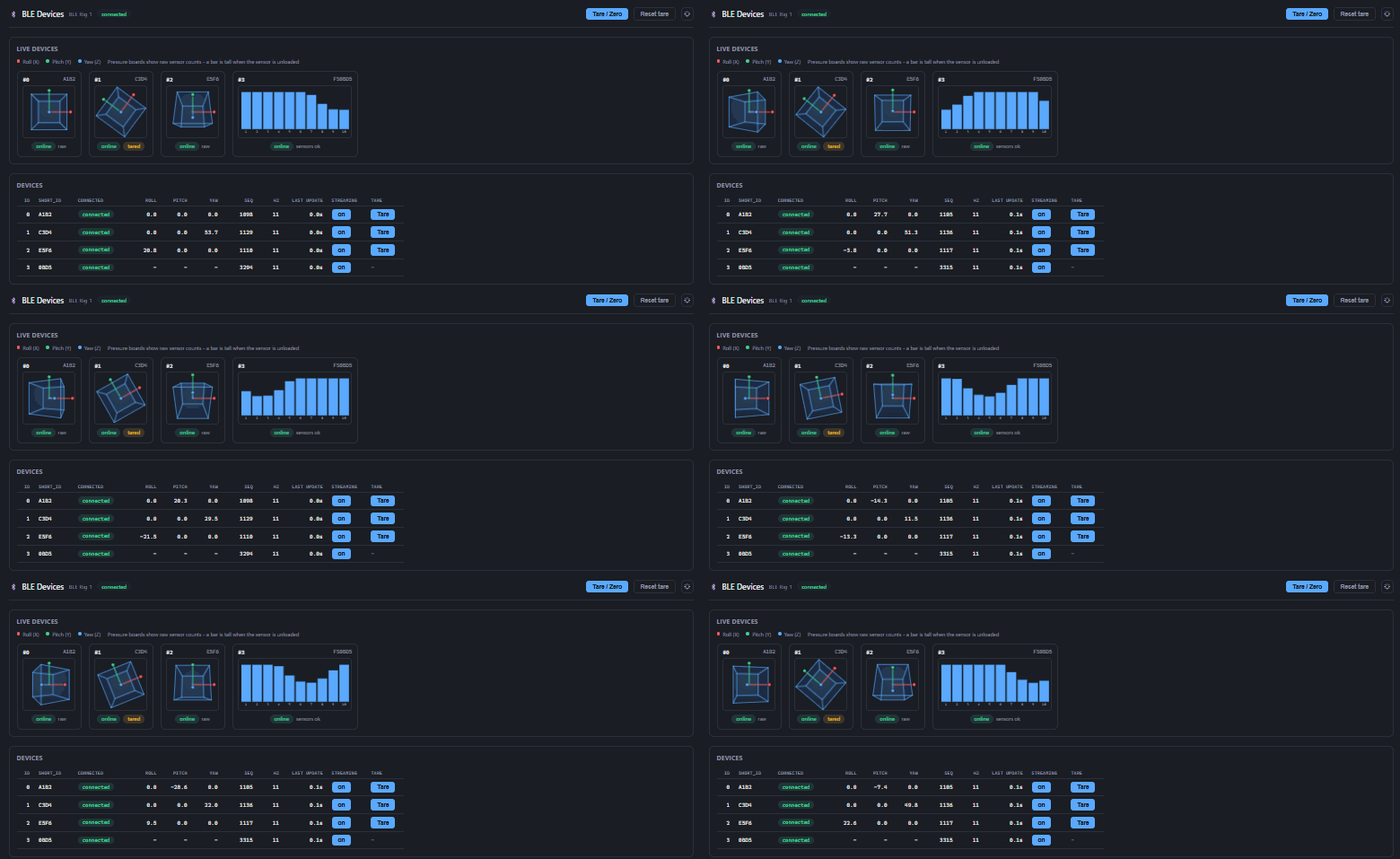
Plate I — the BLE dashboard: every connected board on one page, orientation boards as tareable 3D gizmos and pressure boards as live sensor bars.
What it streams
Orientation boards and pressure boards share every bit of the discovery, reconnect and network plumbing. They differ only in what they measure — and in the type that labels their entry in the JSON.
Each IMU board's absolute orientation as a quaternion, sensor-fused on the device itself.
Each pressure board reports ten load sensors, every one with its raw count, its voltage and a validity flag.
Orientation and pressure boards on the same instance and the same page, each entry tagged imu_orientation or pressure_sensors.
Zero any orientation board to its current pose, live — capture a new reference on the fly.
A rotating cube per orientation board, a ten-column bar chart per pressure board — the same tile, either way.
Small, battery-friendly BLE boards with no cables — ideal for props, wearables and mats.
New — the pressure board
One small battery-powered board carrying up to three analog-to-digital converters, four plus four plus two, for ten pressure sensors. It scans them all at around 150 frames a second and notifies every second frame over BLE.
Every channel arrives as both the raw converter count and the voltage it works out to, so you can calibrate against whichever you prefer.
An unwired or unreadable channel is flagged invalid rather than sent as zero — "not reading" never gets mistaken for "reading nothing".
Each packet carries the converter status mask, which modules answered, the board's own scan rate and its notify counters.
The board finds its own I²C bus at boot and keeps re-probing, so a module reconnected mid-session comes back on its own.
The built-in display shows link state, scan rate and a live bar per sensor — enough to tell a wiring fault from a link fault without a PC.
Each board derives its own label from its BLE address, so one firmware image serves every board in the rig.
Inside the dashboard
Both families share one page: watch orientation and load update in real time, and re-zero anything without leaving it.
Why it's different
Because it's Bluetooth LE, this is also the module a browser could talk to directly via Web Bluetooth — making it the natural pick for lightweight, install-light setups. Adding a second kind of board changed none of that: same JSON shape, same page, same look as every other module.